Is Your Garage Door in Deltona Making Unusual Noises?
Most homeowners think a noisy garage door is just part of the deal. Metal on metal, springs under tension, a little racket here and there. But those sounds aren't background noise — they're warnings. And if you're not listening, you're setting yourself up for a breakdown at the worst possible time. A garage door that squeals, grinds, or bangs isn't just annoying. It's telling you something's wearing out, coming loose, or about to fail.
So here's the reality. If your door still opens and closes, that's great. Just don't assume everything's fine. Every strange sound has a source. Every delay in addressing it makes the repair more expensive. And every ignored warning brings you closer to a door that won't budge — or worse, one that drops without notice.
Sounds That Mean Something's Wrong
Garage doors don't make noise for fun. They're mechanical systems with dozens of moving parts, and when those parts start to wear, they let you know. The trick is recognizing what each sound actually means — and whether it's something you can handle or something that needs a pro.
Different noises point to different problems. Some are minor. Others are red flags. Here's what we hear most often and what's usually behind it:
- Squeaking or screeching: Dry rollers, hinges, or springs are the usual suspects. Lubrication solves most of these, but if the sound persists, the parts may be worn beyond saving.
- Grinding: This often means the opener's gear is struggling or the door isn't tracking properly. Either way, it's not something you want to ignore.
- Banging or slamming: A loud bang usually signals a broken spring or a door that's come off its track. This is a safety issue, not just a nuisance.
- Rattling: Loose hardware is the most common cause. Tightening bolts and brackets can quiet things down, but chronic rattling may point to deeper alignment issues.
- Clicking: Electrical components or misaligned sensors are often to blame. If the door hesitates or reverses unexpectedly, the sensors need attention.
Why Waiting Makes It Worse
We get it — the door still works, so why rush? Because small problems don't stay small. A squeaky roller becomes a cracked roller. A loose bolt becomes a bent track. And a worn spring becomes a snapped spring that leaves your car trapped inside or your door hanging at a dangerous angle.
Ignoring the noise doesn't just cost you later. It puts people at risk. Garage doors are heavy — some weigh over 300 pounds — and when the system fails, gravity takes over. Broken springs, frayed cables, and misaligned tracks can all lead to sudden drops or jams. That's not a repair bill. That's a liability.
What You Can Check Yourself
Not every noise requires a service call. Some issues are straightforward enough to handle on your own, as long as you know what to look for and what to leave alone. Start with the basics and see if the problem clears up.
Here's where to begin:
- Tighten loose hardware: Grab a socket wrench and check every bolt, bracket, and hinge. Vibration loosens these over time, and a few minutes of tightening can eliminate rattles.
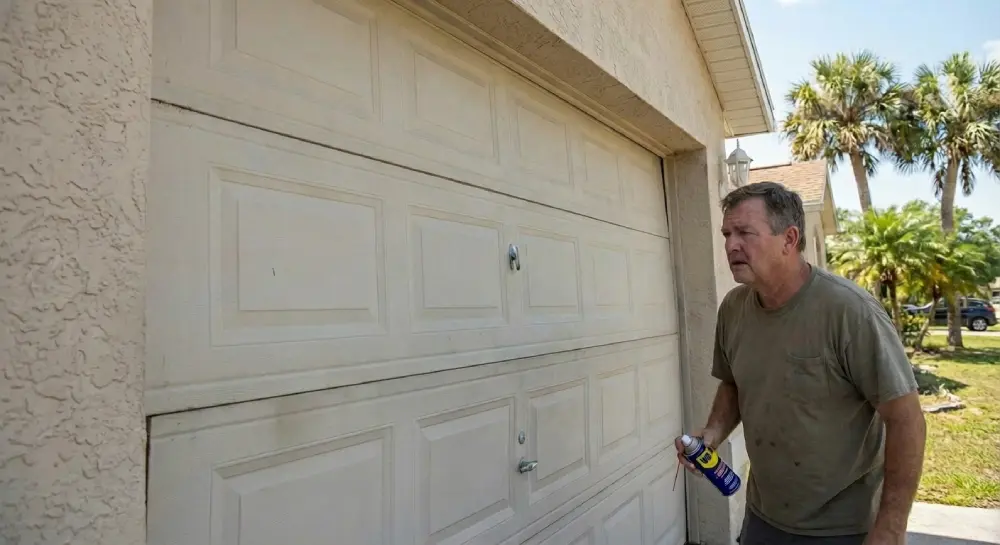
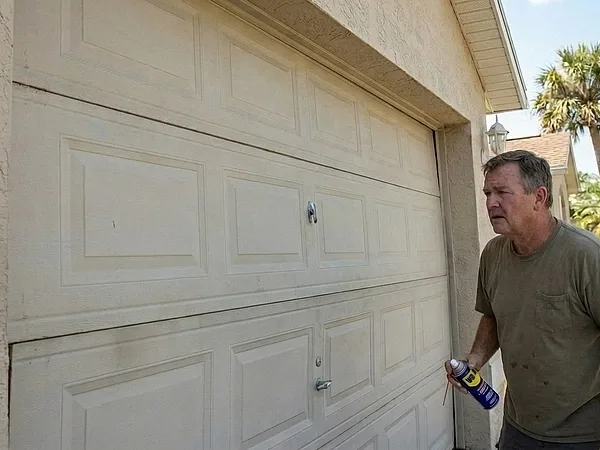
- Lubricate moving parts: Use a silicone-based lubricant on rollers, hinges, and springs. Skip the WD-40 — it attracts dust and gunk.
- Inspect the tracks: Look for dents, debris, or misalignment. Wipe down the tracks and make sure the rollers move smoothly.
- Test the balance: Disconnect the opener and lift the door manually. It should stay put around waist height. If it drops or shoots up, the springs are out of balance.
- Check the sensors: Clean the photo-eye sensors and make sure they're aligned. A misaligned sensor can cause clicking or prevent the door from closing.
When to Call Someone Who Knows What They're Doing
There's a line between maintenance and repair, and crossing it without the right tools or training is how people get hurt. Springs are under extreme tension. Cables can snap. Openers have electrical components that shouldn't be messed with unless you know what you're doing.
If the noise doesn't go away after basic troubleshooting — or if you spot broken parts — bring in a technician. A good one will diagnose the issue fast, explain what's wrong, and fix it without upselling you on things you don't need. Look for someone local, licensed, and reviewed. Deltona has plenty of options, but not all of them are worth your time.
What Happens If You Keep Putting It Off
Delaying repairs doesn't just make the problem worse. It makes it more expensive. A $50 lubrication job becomes a $200 roller replacement. A $200 spring adjustment becomes a $600 spring replacement. And a $600 repair becomes a full system overhaul because the opener burned out trying to lift a door that was already failing.
Beyond the cost, there's the inconvenience. A door that won't open means you're stuck. A door that won't close means your home is exposed. And a door that fails mid-operation can damage your car, your belongings, or worse — someone standing nearby. The noise is your early warning. Use Use it.
Finding the Right Repair Company
Not all garage door companies are created equal. Some show up fast and fix things right. Others drag their feet, overcharge, and leave you with the same problem a month later. You want someone who knows the systems inside and out, carries the right parts, and doesn't waste your time.
Here's what to look for:
- Local presence: A company based in Deltona or nearby will respond faster and understand the area's climate and common issues.
- Licensing and insurance: This isn't optional. If something goes wrong, you need to know you're covered.
- Clear pricing: No hidden fees, no surprise charges. A good company will give you an estimate upfront.
- Real reviews: Check Google, Yelp, and the Better Business Bureau. Look for patterns, not just star ratings.
- Experience with your system: Whether you have a chain drive, belt drive, or direct drive opener, make sure they've worked on it before.
Maintenance Beats Replacement Every Time
A garage door that's maintained regularly will outlast one that's ignored by years. Lubrication, tightening, and occasional adjustments keep everything running smoothly and catch problems before they escalate. Most manufacturers recommend a preventive maintenance tune-up once a year. That's not overkill — it's smart.
We've seen doors last 20 years with consistent care. We've also seen doors fail in five because no one bothered to check the springs or clean the tracks. The difference isn't luck. It's attention.
Strange Noises Don't Fix Themselves
Your garage door isn't going to get quieter on its own. The grinding won't stop. The banging won't disappear. And the longer you wait, the more likely you are to face a repair that could have been avoided. Noises are symptoms, not quirks. If you're experiencing issues with your opener, consider professional garage door opener repair services. For residents in the area, specialized garage door opener repair in Deltona FL is available to address these concerns quickly. When basic repairs aren't enough, garage door replacement may be the most cost-effective solution. Whether you need routine maintenance or comprehensive garage door services, treating these warning signs seriously will save you time, money, and a whole lot of frustration down the road.
Let’s Get Your Garage Door Running Smoothly Again
We know how disruptive a noisy or unreliable garage door can be, and we’re here to help you get back to peace of mind. Don’t wait for a small issue to turn into a major headache—let’s tackle those warning signs together. Give us a call at 386-320-8218 or contact us today so we can keep your garage door working safely and quietly for years to come.
‹ Back
Recent Posts
-
-
Is Your Garage Door in Volusia County Ready for a Full Replacement?
February 20, 2026
-
What to Do When Your Garage Door in Deltona Won't Close All the Way
February 6, 2026
-
-
Is Your Garage Door in Deltona Making Unusual Noises?
January 9, 2026
.png)